

Why Pet Loss Grief Deserves the Same Respect as Any Other
By Gabriel Killian
Guest Blogger | Founder of Memorial Merits and U.S. Navy Service Member
The Phone Call Nobody Prepares You For
When my father died unexpectedly in 2019, I was at sea on a Navy ship with over 3,000 sailors and no way to get home. The grief was overwhelming, isolating, and unrelenting. In the years that followed, as I built a grief and memorial planning resource to help families navigate loss, I started hearing from a group of people whose pain was just as real but rarely taken seriously: pet owners.
Their stories carried the same weight. The same hollow feeling in the chest. The same inability to focus at work. The same guilt over decisions made too fast. But almost all of them said the same thing: “I feel stupid for being this upset over an animal.”
They weren’t stupid. They were grieving. And the world was telling them it didn’t count.
The Science Behind Why Pet Loss Hits So Hard
The bond between humans and companion animals isn’t sentimental fluff. Research backs up what any pet owner already knows.
A 2019 study published in Scientific Reports found that pet owners showed grief responses comparable to those experienced after losing a close human relative, particularly when the relationship involved daily caregiving routines and physical affection (Uccheddu et al., 2019). The disruption isn’t just emotional. It’s neurological. Daily routines built around feeding, walking, and sleeping alongside a pet create deep patterns in the brain. When the animal dies, those patterns break all at once.
The American Veterinary Medical Association recognizes that the human-animal bond is “a mutually beneficial and dynamic relationship” that significantly influences the health and well-being of both parties (AVMA, 2024). Losing that bond triggers real, measurable grief.
Yet culturally, we still treat pet loss as a lesser category. Most workplaces don’t offer bereavement leave for a pet. Friends and family may offer sympathy for a day or two before expecting you to “move on.” The result is what psychologists call disenfranchised grief: a loss that is real but not socially acknowledged or supported.
What Disenfranchised Grief Looks Like in Practice
Disenfranchised grief doesn’t just mean people are sad in silence. It changes how they process the loss and, in many cases, makes recovery harder.
When someone loses a pet and feels they can’t openly grieve, several things tend to happen:
- Guilt compounds the grief. The person feels guilty for grieving “too much” over “just a pet,” which adds a layer of shame on top of the actual loss.
- Isolation increases. Without social support, grieving pet owners often withdraw rather than risk being judged or dismissed.
- Decision-making suffers. Just like with human loss, grief impairs executive function. Decisions about cremation, burial, urns, and memorials feel impossible when you’re also fighting the feeling that you shouldn’t be this affected.
- Delayed processing. People who suppress grief to meet social expectations often experience it resurfacing weeks or months later, sometimes triggered by small things like finding a stray toy or hearing a collar jingle.
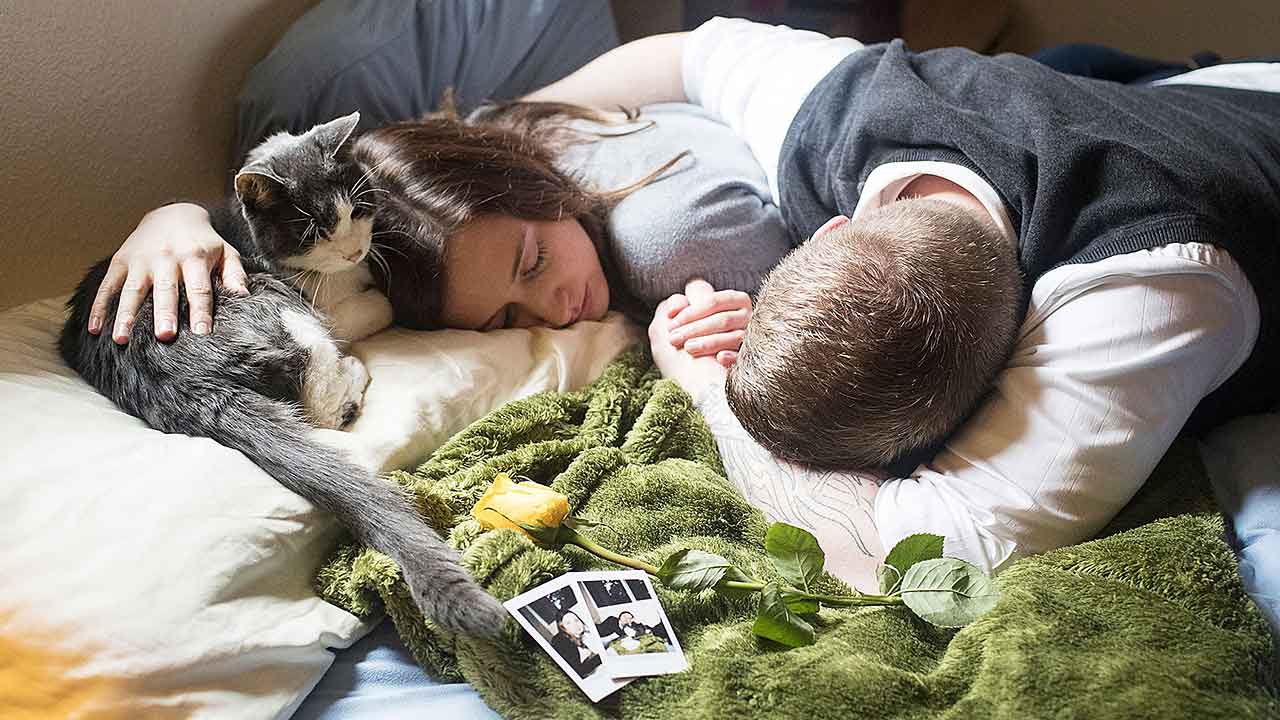
Photo caption: Skippy the cat rests on a bed with his pet parents during his final days, capturing the deep human-animal bond. Photo credit: Julie Austin Photography.
Three Things Every Grieving Pet Owner Needs (and Rarely Gets)
After years of working with families navigating all types of loss, a few patterns have become clear. What helps people through pet loss isn’t fundamentally different from what helps with any other grief. It just needs to actually be offered.
- Permission to grieve fully.
This sounds simple, but it is the single most important thing. Grieving pet owners need someone, whether it’s a friend, a counselor, a vet, or a support group, to say: “This loss is real, and you are allowed to feel it.” The ASPCA’s grief counseling resources emphasize that acknowledging the bond is the first step in healthy processing (ASPCA Pet Loss). - Practical guidance without guilt-driven upselling.
When a pet dies, owners are often faced with decisions about cremation, burial, memorialization, and keepsakes within hours. The pet aftercare industry, like the human funeral industry, sometimes uses emotional vulnerability to push expensive options. Grieving owners deserve clear, honest information about what’s available and what things actually cost, without the pressure. - A meaningful way to honor the bond.
Memorial rituals matter. Research on continuing bonds theory, originally developed for human grief by Klass, Silverman, and Nickman (1996), has been increasingly applied to pet loss. Creating a memorial, whether that’s a garden stone, a photo album, a cremation keepsake, or even a written tribute, gives the grieving person a way to maintain a connection with the animal they loved. It doesn’t replace the loss. It gives it a place to live.
What Veterinary and Hospice Professionals Can Do
If you work in veterinary medicine or animal hospice, you are often the first person a pet owner talks to after their animal dies. That gives you an outsized influence on how they process the loss.
A few things that make a real difference:
- Name the grief. Use the word. Say “grief.” Say “loss.” Don’t soften it to “passing” or “crossing the rainbow bridge” unless the owner uses that language first. Meeting people where they are means acknowledging the weight of what just happened.
- Offer resources before they’re needed. Pet loss support groups, grief hotlines, memorial options, and aftercare information should be available before the moment of crisis, not handed over as an afterthought while someone is sobbing in your lobby.
- Follow up. A single check-in call or email a week after a pet’s death communicates that the loss was real and that the professional cared. This is rare in practice, and it means everything to the owner.
- Normalize the timeline. Grief doesn’t follow a schedule. Some owners will feel functional within days. Others will struggle for months. Both responses are normal, and saying so out loud helps
Grief Is Grief
I didn’t set out to work in pet loss. My own experience was with losing a parent. But grief taught me something I wasn’t expecting: the shape of it doesn’t change much based on who or what you lost. The details are different. The weight is the same.
A person who lost a dog they raised from a puppy for 14 years, who slept beside them every night, who greeted them at the door every single day, is not grieving less than someone who lost a distant relative they saw once a year. The depth of grief tracks with the depth of the bond, not with the species.
The sooner we stop ranking losses, the sooner people can actually start healing. 💜
References
Uccheddu, S., et al. (2019). Pet humanisation and related grief: Development and validation of a structured questionnaire instrument to evaluate grief in people who have lost a companion animal. Scientific Reports, 9, 19272. https://doi.org/10.1038/s41598-019-56649-2
American Veterinary Medical Association. (2024). Human-Animal Bond. https://www.avma.org/resources-tools/human-animal-bond
ASPCA. Pet Loss. https://www.aspca.org/pet-care/general-pet-care/pet-loss
Klass, D., Silverman, P. R., & Nickman, S. (1996). Continuing Bonds: New Understandings of Grief. Taylor & Francis.
Meet the guest blogger, Gabriel KillianGabriel Killian is a U.S. Navy service member and the founder of Memorial Merits, a free resource hub for families navigating grief, funeral planning, legacy preservation, and pet loss support. After losing his father unexpectedly in 2019 while deployed at sea, Gabriel experienced firsthand how overwhelming and exploitative end-of-life decisions can be. That experience led him to build a comprehensive resource covering all stages of loss, from planning ahead to processing grief after it’s over, for both human and pet bereavement. He lives in Virginia. Website: https://memorialmerits.com |
( Please show us all that you like this article by sharing, commenting, and/or giving this a "LIKE" on Facebook. Blog Post Banner Photo: Empty pet bed on the wood floor with a dog collar lying on the bed. Why Pet Loss Grief Deserves the Same Respect as Any Other, AHG Guest Blog Post. )