
When Treatment Ends, Care Shouldn't: Why You Feel Alone (and How Hospice Helps)
By Jayne Law
Guest Blogger | Founder of saudade paws
There is a specific, quiet moment in the veterinary clinic that no one warns you about.
It happens when the conversation shifts. For months or years, the appointments have been about fixing. They were about surgeries, protocols, and recovery. But then, the vet looks at the chart, then at you, and the language changes. The words shift from "cure" to "comfort." From "treating" to "managing."
You walk out to the parking lot with a bag of medications, a set of complex instructions, and a heavy, hollow silence where a support system should be.
If you are standing in that parking lot right now—figuratively or literally—feeling entirely unmoored, please hear this: You are not doing this wrong.
The isolation you feel isn’t a personal failure. It is a structural gap in our veterinary system. In human healthcare, when treatment ends, care expands. In veterinary medicine, sadly, it often feels like care contracts. But there is a philosophy of care designed to bridge that gap, and it’s called animal hospice.
The Expectation Gap: Why You Feel Abandoned
If you have ever cared for a human relative through a terminal illness, you know that a "terminal diagnosis" is a trigger for a new team to step in.
According to the World Health Organization, palliative care is explicitly defined to improve the quality of life of patients and their families. In the human medical model, a terminal diagnosis activates social workers, palliative care nurses, chaplains, and grief counselors. The system acknowledges that the medical battle may be ending, but the emotional and logistical journey is just beginning.
In the veterinary world, that automatic handoff rarely exists.
Caregivers often tell us they feel like they are "asking for too much" when they want more guidance during this phase. You aren’t asking for too much; you are responding to a model of care you have likely seen elsewhere. You are looking for the social worker who isn't there. You are looking for the grief counselor who wasn't assigned to your case.
The shock isn't that you are needy; the shock is realizing that in the veterinary system, the emotional labor of the end-of-life journey defaults entirely to you.
The Invisible Roles You Are Suddenly Carrying
When the professional support recedes, you are forced to assume multiple professional roles overnight. This leads to what researchers call caregiver burden—a distinct form of stress that goes beyond simple sadness.
Suddenly, you are no longer just a "pet parent." You are now:
- The Interpreter: You are tasked with reading subtle signs of pain. Is that panting because it's hot, or because they hurt? Is that hesitation to eat nausea, or just fussiness? The pressure to interpret silence is immense.
- The Decision-Maker: In human medicine, death is usually allowed to occur naturally. In veterinary medicine, you are asked to decide when it occurs. You become the judge and jury, weighing the impossible balance of "too soon" versus "too late."
- The Emotional Container: You must hold your own anticipatory grief—the mourning that begins before the loss—while remaining functional enough to administer meds and manage a household.
- The Advocate: You are navigating finances, appointments, and the terrifying logistics of aftercare, often without a roadmap.
A 2021 study published in The Veterinary Record highlighted that caregiver burden, anticipatory grief, and quality of life are distinct constructs. This means you can be resilient and still be drowning in the burden of care. The exhaustion you feel is the result of role overload, not a lack of love.
This Is Not a Failure of Veterinary Care
It is important to name this gap without blaming the veterinary professionals who have cared for your pet so far.
Your veterinarian is likely compassionate, skilled, and deeply invested in your animal’s welfare. However, they are operating within real, systemic constraints. Veterinary appointments are often 15 to 20 minutes long. Medical training is overwhelmingly focused on diagnosis, surgery, and cure.
There is rarely a billing code for "holding space for a grieving owner" or "spending an hour discussing the ethics of euthanasia."
Veterinarians face high rates of burnout and moral distress themselves, partly because they care so deeply but lack the systemic time and resources to support families through the emotional nuances of death. The silence you feel isn't because they don't care; it's because the system wasn't built to hold this specific type of transition.
Where Animal Hospice Changes the Experience
This is where animal hospice comes in.
It is crucial to understand that hospice is a philosophy of care, not just a place—one that can be practiced alongside your primary veterinarian. It is a shift in mindset from "What else can we do to fix this?" to "How can we make this time gentler?" According to the International Association for Animal Hospice and Palliative Care (IAAHPC), animal hospice focuses on living life as fully as possible until the end. It restores the support network that falls away when curative treatment stops.
Here is how hospice changes the landscape for a caregiver:
1. It Validates the Shift in Goals
Hospice gives you permission to stop fighting the disease and start prioritizing the patient. It validates that a "good day" might just mean sleeping in the sun without pain, rather than perfect blood work.
2. It Addresses the "Unit of Care"
In hospice philosophy, the "patient" is not just the animal—it is the entire family. The 2016 AAHA/IAAHPC End-of-Life Care Guidelines emphasize that supporting the mental health of the caregiver is an ethical obligation. Hospice providers ask, "How is your stress level?" just as often as they ask, "How is the dog's appetite?"
3. It Offers Guidance Through Uncertainty
Hospice providers act as guides. They help you map out the journey so you aren't walking in the dark. They can tell you what the end looks like, what symptoms to watch for, and how to prepare. They replace the panic of the unknown with the calm of a plan.
4. It Restores Dignity
By slowing the process down, hospice allows for dignity. It moves the experience away from a crisis in an emergency room at 2:00 AM and toward a peaceful, planned transition—often in the comfort of home.
Why Hospice Still Isn’t Accessible Everywhere
If this sounds like exactly what you need, you might be wondering: Why didn't my vet offer this?
The reality is that animal hospice is a rapidly growing field, but it is still catching up to the need. Not all clinics have the resources or the personnel to offer dedicated hospice services. Unlike human hospice, which is subsidized by insurance and government programs, animal hospice is often a private, out-of-pocket service.
Many caregivers still have to seek it out themselves. This is changing, but for now, you may have to be the one to ask for a referral or search for a specialized mobile hospice vet or an end-of-life consultant.
What You Are Really Asking For
When we speak to caregivers in our community, we find that they aren't usually asking for miracles. They aren't asking for immortality for their pets.
They are asking for permission.
- Permission to trust their gut.
- Permission to say, "I think we are done with surgeries."
- Permission to grieve a pet who is still alive.
- Permission to choose peace over longevity.
Caregivers are asking for someone to slow the room down. When you are operating in crisis mode, time speeds up. Hospice puts a hand on your shoulder and slows the clock, giving you the space to breathe and make decisions based on love, not fear.
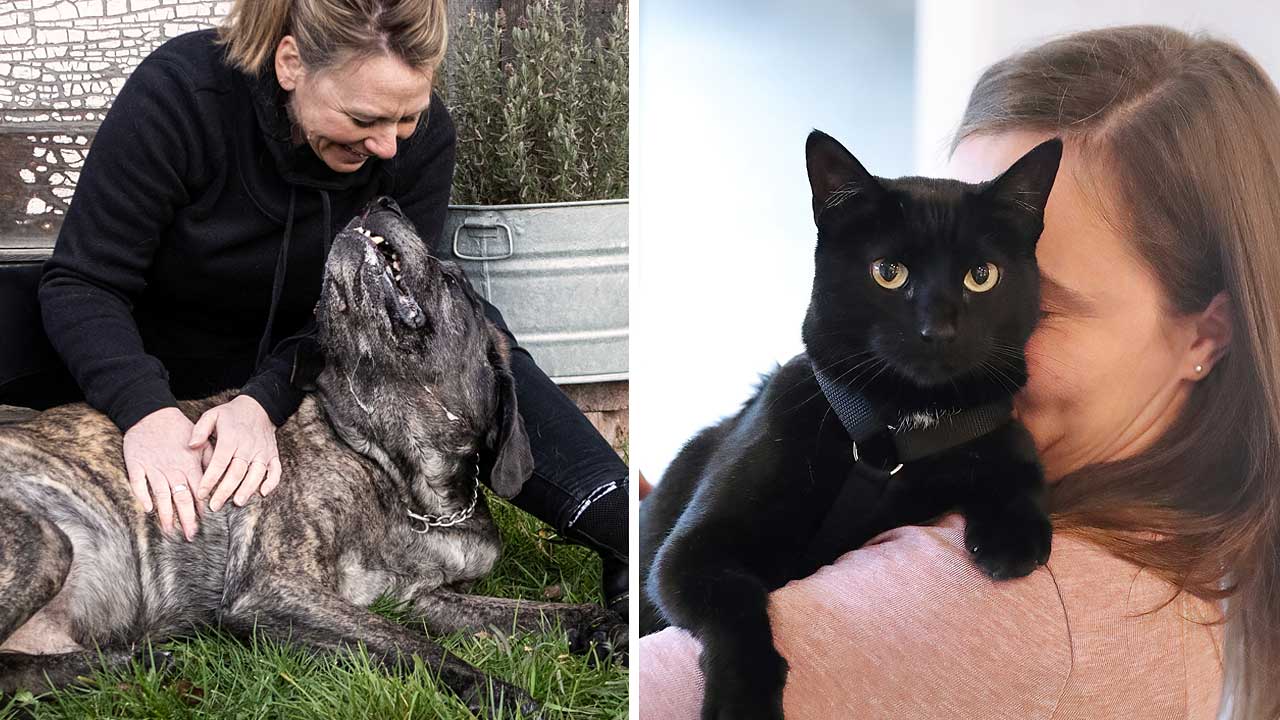
Photo credit and caption: Julie Austin Photography, left photo of female pet caregiver massaging her large senior dog on the lawn outside, right photo of female caregiver holding her black cat in an embrace.
When Care Is Held, Decisions Become Kinder
Research and experience both tell us that when a caregiver feels supported, the outcomes are better for the pet.
When you have a guide, you are less likely to wait until a traumatic crisis forces your hand. You are less likely to carry the crushing weight of "regret" after the fact, wondering if you did the right thing.
Support allows you to be present. Instead of spending your pet's final weeks frantically Googling symptoms and agonizing over logistics, you can spend them being with your companion. You can sit on the floor with them. You can feed them the cheeseburger. You can be their person again, instead of just their nurse.
Care Should Not End When Treatment Does
The end of a life is just as significant as the beginning. It deserves just as much care, just as much planning, and just as much tenderness.
If you are currently navigating this journey, know that your desire for support is valid. You are carrying a heavy load, and you deserve a village to help you bear it. Whether through a dedicated hospice veterinarian, an end-of-life consultant, or a supportive community of peers, seeking help is the most compassionate thing you can do—for yourself, and for the animal you love.
We are walking this path with you.
* * * * * * 💜 * * * * * *
Sources:
- World Health Organization: https://www.who.int/news-room/fact-sheets/detail/palliative-care#:~:text=Palliative%20care%20involves%20a%20range,needs%20and%20preferences%20of%20individuals.
- The Veterinary Record: https://bvajournals.onlinelibrary.wiley.com/doi/abs/10.1002/vetr.74
- International Association for Animal Hospice and Palliative Care (IAAHPC): https://iaahpc.org/faqs/
- American Animal Hospital Association: https://www.aaha.org/wp-content/uploads/globalassets/02-guidelines/end-of-life-care/2016_aaha_iaahpc_eolc_guidelines.pdf
 |
Meet the guest blogger, Jayne LawJayne Law is the founder of saudade paws, a pet palliative care and end-of-life consultancy focused on supporting caregivers through the emotional realities of a pet’s final chapter. She is the author of A Field Guide for Pet Caregivers, which explores the emotional journey, ethical questions, and decision-making caregivers navigate during a pet’s final stage of life. Jayne collaborates with veterinary teams and pet service providers to improve the end-of-life experience for pet caregivers and the animals they love. Discover more about Jayne and her contributions to the Animal Hospice field at: |
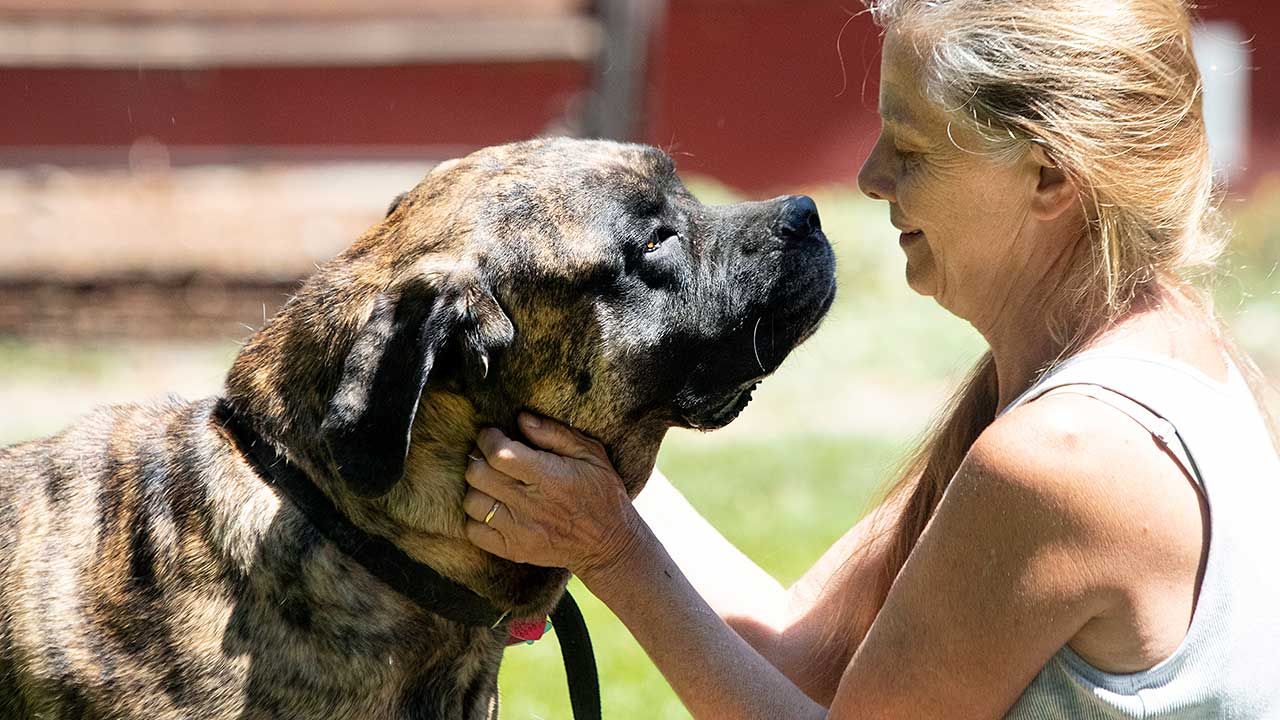
( Please show us all that you like this article by sharing, commenting, and/or giving this a "LIKE" on Facebook. Photo credit: Julie Austin Photography, photo of a senior large dog and pet caregiver in a tender moment. When Treatment Ends, Care Shouldn't: Why You Feel Alone (and How Hospice Helps), AHG Guest Blog Post. )