
What to Do with the Photographs After Your Pet Is Gone
By Nour
Guest Blogger | Creative Writer, AIPetz
I write about pet loss and remembrance, and I spend much of my time in quiet conversation with people in the first raw weeks after a companion animal has died. One moment comes up again and again — almost shyly, as though it isn’t allowed. Someone opens their phone, a photo of their pet appears, and the floor drops out from under them. They can’t look at it. But they can’t bring themselves to delete it, hide the folder, or take the frame down off the wall, either. So the photographs sit in a kind of limbo, and a small, constant ache settles in around not knowing what to do with them.
If you are in that place right now, let me say this first: there is nothing wrong with you. This is one of the most common — and least talked about — parts of grieving an animal. This piece is about those photographs: why they hurt, what you might gently do with them, and how they can become a comfort again, in your own time and no one else’s.
Why the photographs hurt so much
A photograph is a small time machine. It doesn’t just show you your pet — it drops you straight back into the afternoon it was taken: the light in the room, the warmth of them leaning against your leg. In ordinary life that’s a gift. In grief, it collapses the distance between then and now in a single second, and the contrast can be unbearable. The same image holds both the love and the loss, stored together, impossible to pull apart.
It helps to know this is grief doing exactly what grief does. The pain you feel looking at the photo is not a sign you’re handling things badly. It is a measure of how real the bond was.
There is no schedule for this
Some people look at every photo the night their pet dies and find comfort in it. Others can’t open the folder for months. Both are completely normal. There is no correct timeline, and no one — however well-meaning — gets to set yours.
A few things worth giving yourself permission to believe:
- You do not have to look today.
- You do not have to delete anything, ever, to “move on.”
- You do not have to display a photo before you’re ready.
- “Later” is a complete and healthy answer.
Gentle things you can do with the photos, when you’re ready
When the time feels right — and only then — there are small, low-pressure steps that many grieving pet parents find soften the ache:
- Make one quiet archive. Move the photos into a single folder or album so they stop ambushing you in your everyday camera roll. This one act can return a sense of control.
- Choose one image. Not the saddest, and not necessarily the most flattering — the truest one. The photo that looks most like who they actually were to you.
- Print one. Screens are made for scrolling past. A print sits still, and lets you visit your pet on purpose rather than by accident.
- Write the story behind a photo. A sentence or a page — where you were, what they’d just done, why you took it. Putting words to an image can loosen something that’s been stuck.
- Share it with someone who knew them. Grief shared is grief witnessed. Sending a friend “look how happy he was here” can be its own small relief.
Turning a photograph into something you keep close
There comes a point, for many people, when a photo on a phone no longer feels like enough — when you want the love to take up space in the world again. This is where a single image can become something more lasting: a framed print, a hand-finished portrait, a paw-print keepsake, a small shelf or memory box, or a donation made in your pet’s name.
Grief researchers describe something called continuing bonds — the now widely accepted idea that healthy grieving rarely means “letting go” or “getting over” a loss. More often, it means finding a new, sustainable way to carry the relationship forward. A chosen object — something you decided to make from their picture — can be part of that. It turns the photograph from something that happens to you into something you’ve shaped on purpose: a way of saying you were here, you mattered, and I get to keep you close.
There is no right form for this. The right one is whatever lets you feel near them without bracing for pain.
When you’re ready — but not before
If you try one of these things and it’s too much, that is information, not failure. Close the folder. Put the frame face-down for a while. Come back next week, or next season. You are allowed to change your mind in both directions — to put a photo up, then take it down, then put it up again.
A few quiet signs you might be ready: you find yourself wanting to see them rather than dreading it; a memory makes you smile before it makes you cry; you catch yourself wanting to tell someone a story about them.
Where to find support
Please remember that the grief you feel for an animal is real grief, and you do not have to carry it alone.
Compassionate, free support exists:
- The Association for Pet Loss and Bereavement (aplb.org) offers grief resources and support chats.
- The ASPCA (aspca.org) provides end-of-life and pet-loss guidance for grieving families.
Many veterinary schools also run pet-loss support lines staffed by people who understand exactly what you’re going through. Reaching out is not an overreaction — it is one of the kindest things you can do for yourself.
A last, gentle thought
The reason the photographs hurt is the same reason they are precious: they are proof that the love was real, and that a particular, irreplaceable animal shared their life with you. Right now they may feel like wounds. In time — your time — they tend to soften back into what they always were: a way of visiting someone you loved.
Be patient with yourself. The pictures will wait. And one day, you will be glad beyond words that you kept them. 💜
Meet the guest blogger, NourNour writes about pet loss, remembrance, and the small rituals that help people carry love forward after a companion animal dies. She works with AIPetz, a studio that helps grieving pet parents turn a single photograph into a memorial portrait that keeps a pet and their person together in one piece of art. You can read her gentle guide to memorial pet portraits, or visit AIPetz to learn more. |
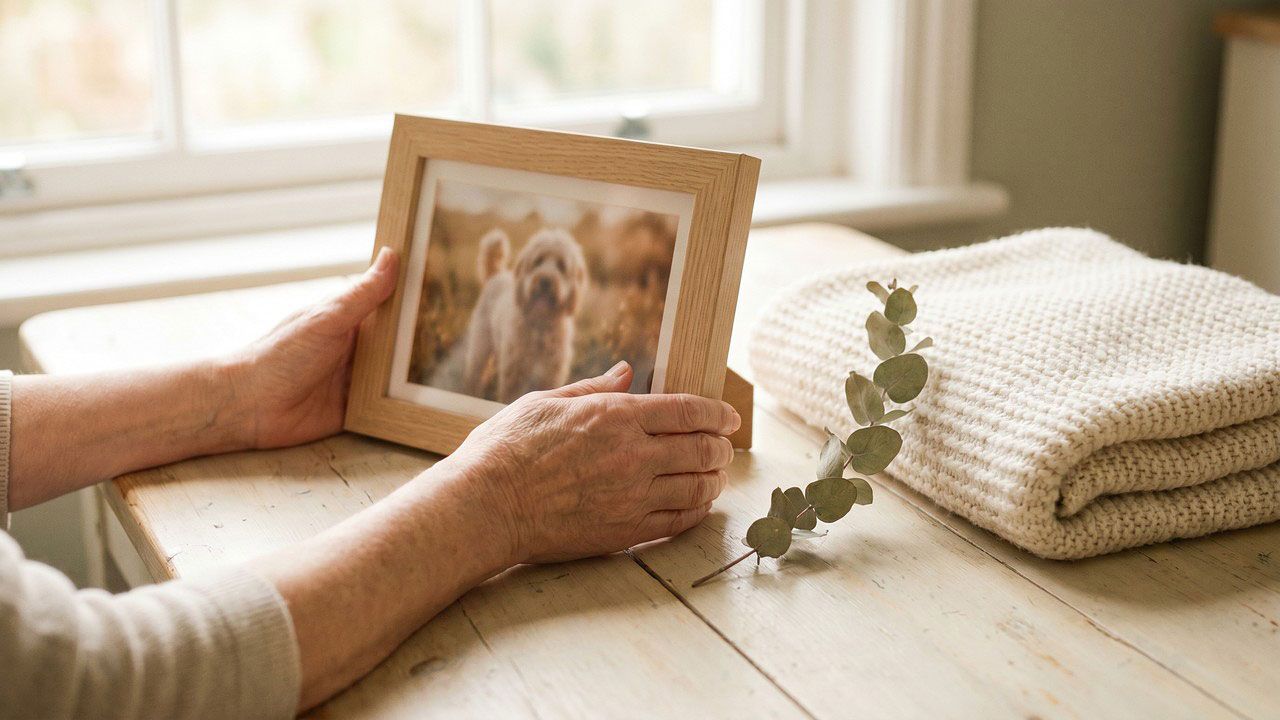
( Please show us all that you like this article by sharing, commenting, and/or giving this a "LIKE" on Facebook. Blog post banner for guest blog article, What to Do with the Photographs After Your Pet Is Gone, photo of someone sitting at a desk and holding a framed photo of their beloved dog. )