
Preserving Your Pet’s Story During End-of-Life Care
By James Harrison
Guest Blogger | Creative Writer, SnoutCraft
When a beloved pet enters end-of-life care, time can begin to feel both precious and disorienting. There may be medications to manage, appointments to remember, decisions to make, and emotions that arrive without warning. In the middle of all that, preserving your pet’s story can be a quiet way to stay connected to who they are, not only what is happening to them.
Memory-keeping does not need to be polished, expensive, or elaborate. It can be as simple as writing down the small habits you never want to forget: the way your dog waited by the door, the exact sound of your cat’s purr, the spot on the couch that became theirs by ancient household law. These ordinary details often become the heart of a pet’s story.
End-of-life care is not the time to pressure yourself into creating the perfect tribute. The most meaningful keepsakes are usually the ones that feel true.
Start With What Feels Possible
A pet’s story does not have to be documented all at once. If you are tired or overwhelmed, choose one small thing. Take one photo. Record one short video. Write three sentences in your phone.
You might begin with prompts like:
- What did my pet love most?
- What routines shaped our days together?
- What silly habit always made me smile?
- What did they teach me about comfort, patience, or joy?
- What do I want future me to remember?
These prompts can be answered in fragments. A list is enough. A voice memo is enough. Memory-keeping should support you, not become another task to perform well.
Capture the Everyday Details
During end-of-life care, families often take photos of big moments: final outings, family visits, or quiet goodbyes. Those matter. But the everyday details deserve attention too.;
Consider documenting:
- Favorite sleeping places
- Food bowls, collars, blankets, toys, or beds
- The view from their favorite window
- Morning or evening routines
- Their paw resting in your hand
- The way they looked at you
- The paths they took through the house or yard
These details can feel small now, but they often carry a whole world later. A photo of worn floorboards near the food bowl may hold as much feeling as a formal portrait.
Photo caption: Small daily scenes can become meaningful parts of a pet’s story.
Record Their Sounds and Movements
Photos preserve stillness, but pets are remembered in motion: tail thumps, slow stretches, chirps, snuffles, barks, meows, and the soft rhythm of breathing while they sleep.
If your pet is comfortable being recorded, short videos can capture:
- A favorite greeting
- A walk, even a very slow one
- A purr or happy sigh
- The sound of tags jingling
- The way they respond to their name
- A familiar bedtime routine
Keep the recording gentle. There is no need to stage anything. If your pet is resting, let rest be the memory. The goal is not to make a dramatic keepsake, but to honor their real life.
Make a Simple Story Timeline
A timeline can help you see your pet’s life as a whole, especially when illness has started to take up so much attention.
You might include:
- Adoption or first meeting
- Favorite homes, places, or people
- Nicknames and how they started
- Big adventures or small rituals
- Health milestones, if you want to include them
- What they loved at different ages
- What changed as they grew older
This timeline can be handwritten, typed, or built from photos. It does not have to be complete. Even a dozen moments can remind you that your pet’s life was more than their final chapter.
Invite Others to Share Memories
If your pet has been loved by family, friends, neighbors, pet sitters, or veterinary staff, you may want to invite them to share a memory. Some people will remember things you never saw: how your pet behaved when you were away, how they greeted visitors, or what made them unforgettable to someone else.
You can ask gently:
“Would you be willing to send me one favorite memory of them?”
People may respond with a sentence, a photo, or a story. These messages can become part of a memory book, printed folder, or digital archive. They can also be read later, when you need to feel less alone in your grief.
Create a Keepsake Box
A keepsake box can hold physical reminders in one place. It can be as simple as a shoebox, photo box, or small storage container.
Items might include:
- Collar, harness, or tags
- Favorite toy
- A small blanket or bandana
- Printed photos
- Sympathy cards or notes
- A written list of nicknames
- Paw print or fur clipping, if this feels right to you
Some families find physical keepsakes comforting. Others find them too painful at first. There is no correct timeline for opening, organizing, or displaying these items. You can put them away and return when you are ready.
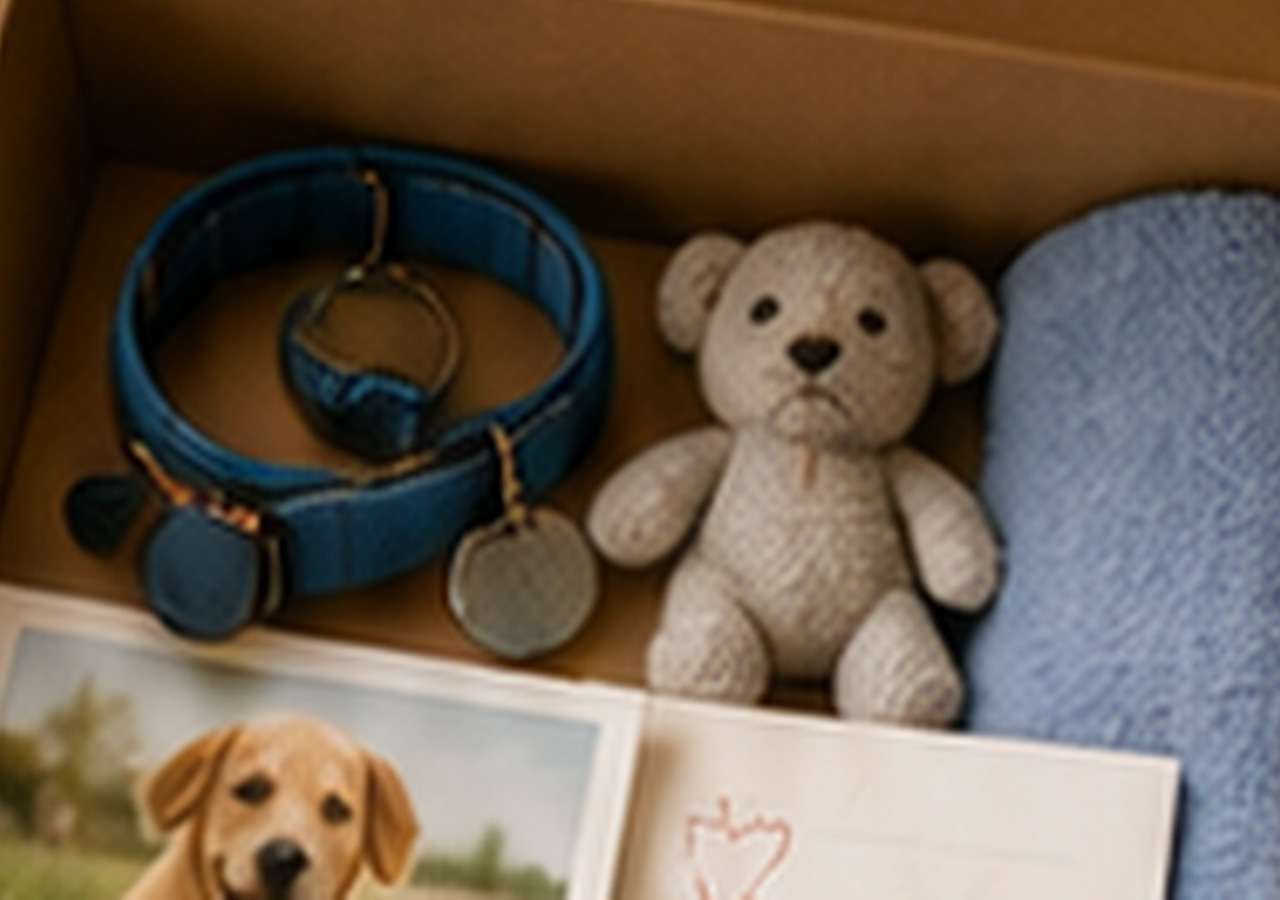
Photo caption: A simple box can hold reminders such as collars, photos, notes, and favorite objects.
Preserve Their Place in the Home
End-of-life care often changes the home. Beds may move closer. Ramps, towels, medication schedules, or feeding stations may appear. These changes can be emotionally loaded, but they are also evidence of care.
You might take photos of the spaces that held your pet’s life: the sunny patch on the floor, the chair they claimed, the gate they waited behind, the corner where their bed lived. Some families sketch a simple map of their pet’s favorite places in the home or yard.
This can be especially meaningful if you move later, rearrange the house, or eventually feel ready to change the space.
Keep a Gentle Journal
A journal during hospice care does not need to focus only on symptoms or decisions. For medical questions, families should rely on their veterinarian or hospice team. A memory journal can have a different purpose: noticing love while it is still present.
You might write:
- “Today they enjoyed…”
- “Today I noticed…”
- “One thing that still feels like them is…”
- “One thing I want to thank them for is…”
- “One memory I keep returning to is…”
Some days may be too hard to write. Skipping days does not make the journal less meaningful. A few honest entries can become a powerful record of devotion.
Protect Digital Memories
Digital photos and videos can scatter across phones, texts, social media accounts, and old computers. When you have energy, create one folder for your pet’s memories. Name it clearly and back it up in at least one additional place.
You can include:
- Photos and videos
- Voice memos
- Scanned drawings from children
- Written stories
- Messages from loved ones
- Adoption paperwork or old records, if meaningful
This is also a kindness to your future self. Grief can make it hard to search through thousands of images. A dedicated folder makes your pet’s story easier to find when you want to revisit it.
Let Children Contribute in Their Own Way
If children are part of your pet’s life, memory-keeping can help them express feelings they may not yet have words for. Keep it simple and age-appropriate.
They might draw a picture, choose a photo, write a note, make a list of favorite things, or help decorate a memory box. Avoid forcing participation. Some children want to talk and create; others need quiet or repetition. Their contribution does not need to look like an adult tribute to be meaningful.
Remember That Love Is Not Measured by Output
It is possible to love your pet deeply and still take very few photos in their final days. It is possible to plan a memory project and never finish it. Exhaustion, anticipatory grief, caregiving demands, and decision fatigue are real.
Your pet’s story already exists because you lived it together. Memory-keeping is not a test of devotion. It is simply one way to gather what you can, while you can, with tenderness. In end-of-life care, preserving your pet’s story can help shift some attention back toward identity: the companion, the mischief-maker, the comforter, the shadow, the household presence who changed daily life in ways both grand and tiny.
Start small. Keep what feels true. Let the story be imperfect, because real love always is.
* * * * * * 📔 * * * * * *
Meet the guest blogger, James HarrisonJames Harrison writes for SnoutCraft, a custom pet portrait studio creating artist-directed, human-reviewed framed portraits for pet lovers and memorial gifts. Visit https://snoutcraft.com to learn more. |
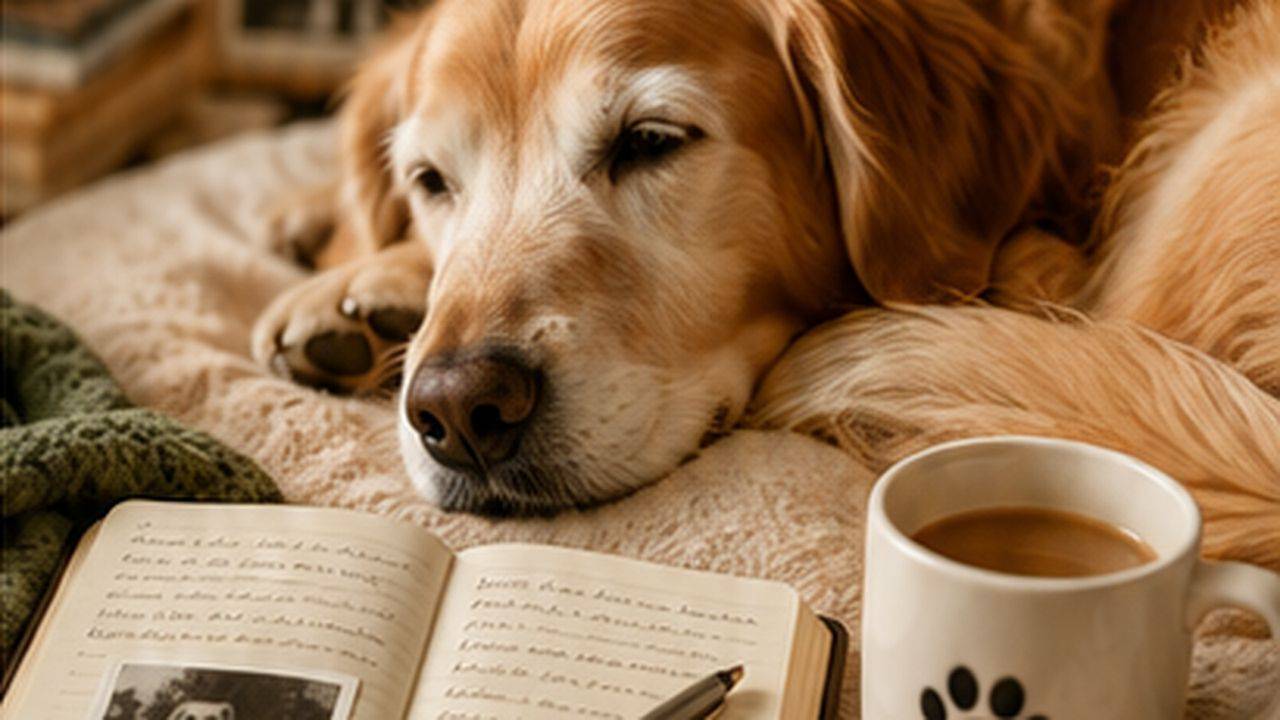
( Please show us all that you like this article by sharing, commenting, and/or giving this a "LIKE" on Facebook. Blog post banner for guest blog article, Preserving Your Pet’s Story During End-of-Life Care, image of an older Golden Retriever dog resting beside a memory journal, framed photo, and mug in a quiet home setting. )